AWAITING THE SPRING
LIFE OF KARIMBI
AWAITING THE SPRING
AWAITING THE SPRING
AWAITING THE SPRING
LIFE OF KARIMBI
LIFE OF KARIMBI
LIFE OF KARIMBI
LIFE OF KARIMBI
LIFE OF KARIMBI
LIFE OF KARIMBI
LIFE OF KARIMBI
LIFE OF KARIMBI
Peace and harmony go hand in hand, Nature is a home to heal and to rebind. Our evolution has changed our thoughts, our lifestyle have corrupted our instincts. It’s important to respect the cycle of coexistence and to following the rhythm of life, invoking the inner peace to feel content would help in enlightening the spiritual energy, developing a connection between nature and soul will eliminate needless desires and to cherish simplicity.
Peace and harmony go hand in hand, Nature is a home to heal and to rebind. Our evolution has changed our thoughts, our lifestyle have corrupted our instincts. It’s important to respect the cycle of coexistence and to following the rhythm of life, invoking the inner peace to feel content would help in enlightening the spiritual energy, developing a connection between nature and soul will eliminate needless desires and to cherish simplicity.
MOOD
One of India’s most enduring artistic traditions is its myriad forms of embroidery. Every state and region boasts of its own style, but needlework is not merely a means of ornamentation. The fabrics are also threaded with stories of the community, with motifs emerging from their natural surroundings, economic state, and sociopolitical milieu.

Kashida (Kashmir)
Kashida is a popular Kashmiri embroidery encouraged by the beautiful surroundings of the valley.
The most common themes of Kashida embroidery are birds, Kingfisher, butterflies, fruits, and vegetables like mango, almonds, cherry, grapes; and flowers like lotus, blossoms, creepers, maple leaves.
The best material for the embroidery is wool, Cotswold, or silk wool and Cotton. Embroidery is often evident on shades of white and light shades and sometimes they are also on pastel colors but nowadays they are using a variety of colors like blue, yellow, purple, red, green, black.

Chikankari (Uttar Pradesh)
The word Chikankari is coined from Persian word Chakeen that means elegant patterns on the fabric. This type of embroidery is famous in the state of Uttar Pradesh especially the city of Lucknow known as a hub of Chikankari embroidery. Chikankari embroidery is also known as a Shadow Work by using herringbone stitch from the wrong side of the fabric to create the shadow on the right side, imparting an outline for Motif.

Kantha (Bengal)
Kantha in Sanskrit means rags. It is a traditional artist Bengal which means Patched Cloth.This type of embroidery is done on discarded comments like layers of dhoti, sari stitched together with simple running stitch in the white thread that provides protection from the cold. The Muslin sari of Grey, black or white colors are the elegant and beautiful illustration of Handloom Textiles are considered valuable by the women folk of Bengal.

Phulkari (Punjab)
Phulkari is a Punjabi rural tradition of handmade work derived from two Sanskrit word Phul means flower and Kari mean work. The Phulkari embroidery is done on The Wrong side with the threads of floss silk called Pat. Pat is red, white, golden, green, blue, purple, and orange in color.The motifs are made of horizontal, vertical, and diagonal stitching producing geometrical patterns like square, rectangle, vertical, and horizontal lines.
Zari Work
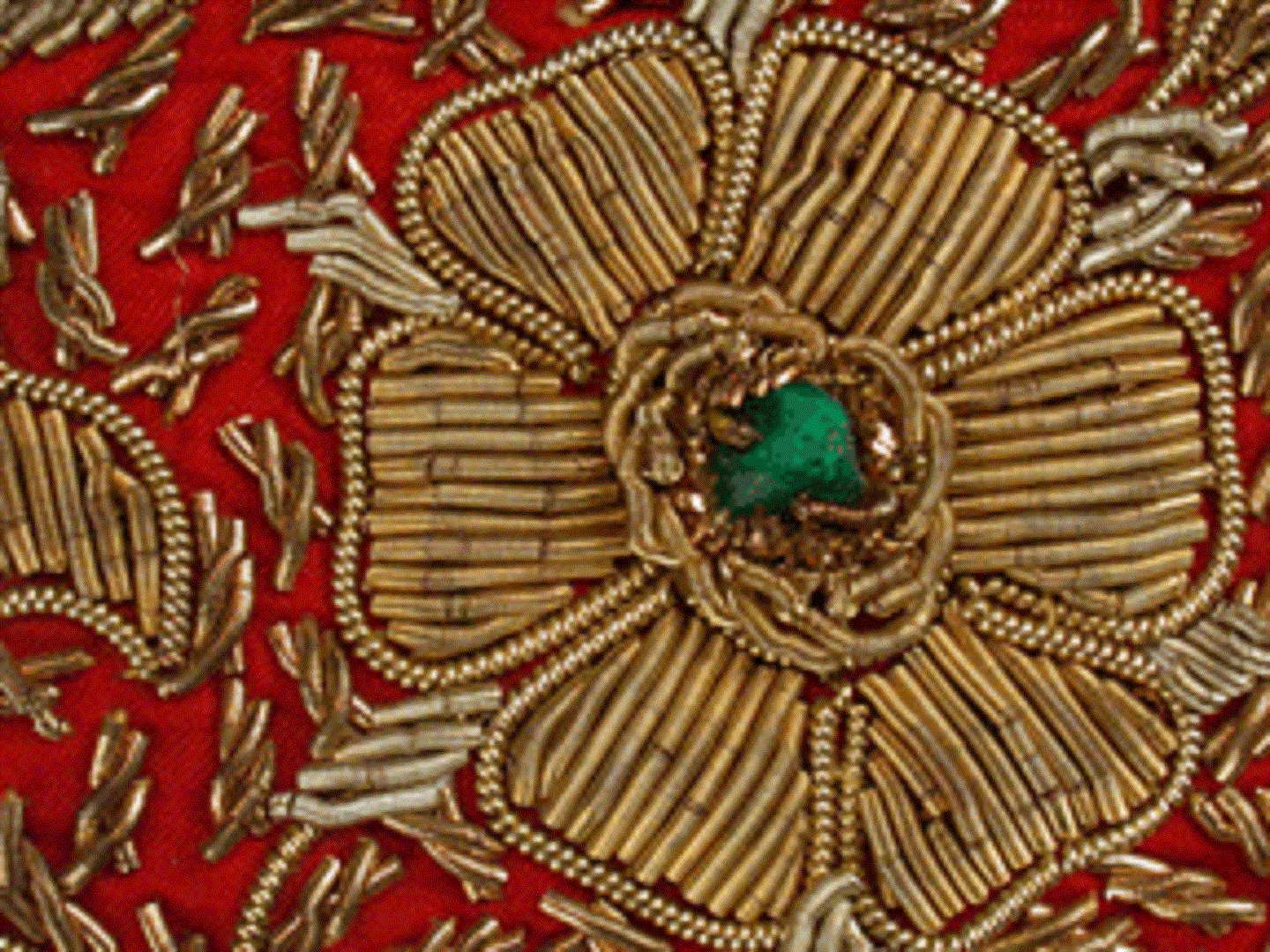
Zari is also known as Zardosi embroidery.Zardozi is a combination of two Persian terms zari means gold and dozi means embroidery. Zari embroidery is done using gold and silver thread for embroidery work.There are two main types of embroidery Zardosi is the heavy embroidery and Kamdani is the lighter one.
The Zari embroidery has 5 major designs with further variations. They are
-
Jali which comprises of geometrical pattern
-
Bharat designs are the filling work
-
Floral designs with motifs of flowers and creepers.
-
Birds with panchi motif
-
Animal motifs
The popular styles practice all over India in Zari embroidery are
-
Salma Sitara which uses small round pieces of gold and silver in between the Zari work
-
Kamdani in which thousands of thoughts produce a glittering effect and the design is known as Hazari Butti
-
Minakari using a gold coating
-
Mokaish did with silver thread
-
Gota in which the borders are made up of gold and silver threads.

Kasuti (Karnataka)
Kasuti is a traditional folk embroidery of Karnataka state and is an art form of women.Kasuti embroidery symbolizes the traditions, customs, and profession of Karnataka people. The word Kasuti is derived from word Kai means hand and Suti means cotton thread.
Kasuti work is done on five garments- Kunchi (bonnet and cape combined), lehanga (skirt), seragu (pallav of a sari), kusuba (bodice), and kulai (bonnet).
The motifs used in kasuti embroidery varied between mycological and architectural to flora and fauna. The motifs used in kasuti are inspired from-
-
Temple architecture: gopurams of South India, raths and palanquins
-
Bird motifs like peacock, swan, squirrel, parrot,
-
Animal motifs include sacred Bull Nandi, elephant, and deer.
-
Kasuti embroidery inspired from articles of daily use like rudraksha, flower pot, anklets, bells, chess square, cradle.

Chamba Rumal ( Himachal Pradesh)
Chamba rumals are the exceptional and wonderful work of embroidery depicting a delicate fine and flawless work called needle miniatures of Himachal or Pahari Rumal.he Chamba Rumal had unique importance as embroidery women are used for covering gifts, deities, household accessories such as caps, hand fans, pillow covers, wall hanging, ceiling covers, and blouse piece.There are two different kinds of Chamba rumals one in the style of Pahari paintings and the other one is a folk style used by women to embroidery their choli and rumals using their own designs. The Chamba Rumal is a combination of infinite vibrant and contrasting colors like red, yellow, green, blue, crimson, and purple. The folk style uses bright colors including pink, lemon while the sophisticated color palette includes pale shades like dark green, blue, ochre.
Embroidery is done using a double Satin stitch called Dorukha. Stem stitch is used to draw the outlines and Gujjar women used darning, herringbone, and sometimes satin stitch. Chamba embroidery is inspired by immortal classics like Mahabharat, Ramayan, themes from Indian mythology, a game of chaupad, hunting and marriage scenes, and even the episodes from Raasleela of Radha and Krishna.
DESIGN BRIEF
SUBJECT: Traditional Indian textile
STYLE: Ethnic
CATAGORY: women’s
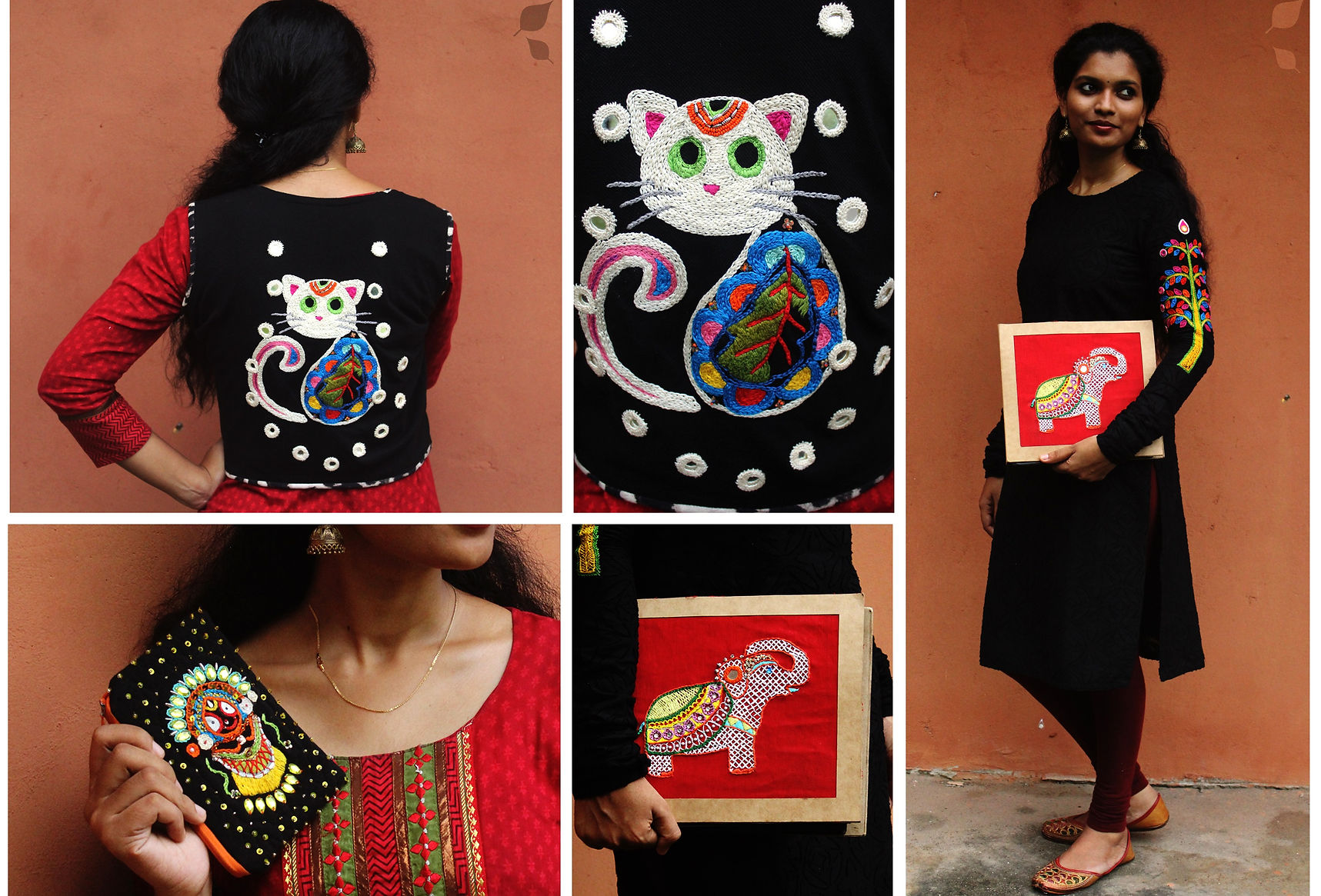
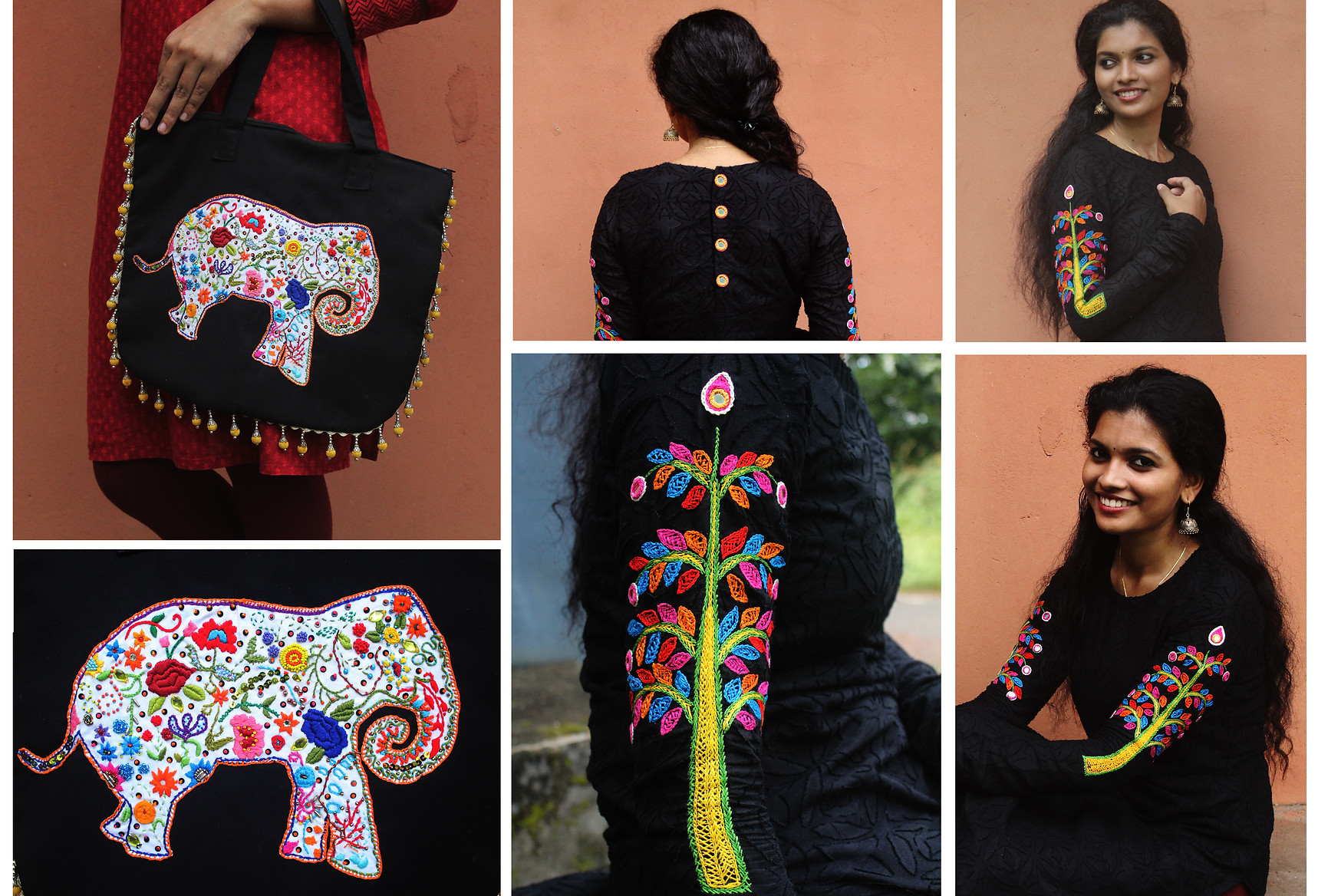
PRODUCTS: Hand bag, Wallet, waist coat, Book cover, Kurthi
CONCEPT: Indian and its embroideries, Developing siplified Indian motifs, using diffrent embroidery techniques to emblish them.
COLOUR: Traditional colours of India FABRIC: Knits and woven
TECHNIQUE: Hand embroidery
MOTIFS: Traditional Indian motifs such as Elephant’s, Cat, Patachithra, Tree of life.
EXPLORATION
Learning embroidery techniques.
MOTIF DEVELOPED


EMBROIDERIES